


“Give me a man or woman who has read a thousand books and you give me an interesting companion. Give me a man or woman who has read perhaps three and you give me a very dangerous enemy indeed.” – Petyr Van Abel, The Witching Hour (1990), by Anne Rice
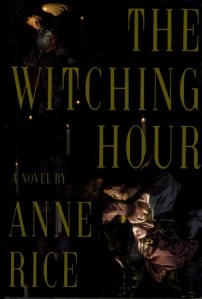
Spoiler-free review:
Rating out of 10: well exceeding 10, some of the turn of phrase is very 1990s and it drags a bit in the middle but in far too many ways, this book has hardly aged, just as Maguire’s Wicked (1995), Juliette and Justine by de Sade (1791/1797) and 1984: Nineteen Eighty-Four (1949) by George Orwell has hardly aged except linguistically in the human way. These could all have been written yesterday. If you dislike Anne Rice’s prose or philosophical explorations, however, you will not like this book. That said, anyone complaining sincerely about Julien Mayfair’s various consensual (but definitely incestuous affairs) and not Marguerite Mayfair’s literal and allegorical eugenics or the Catholics and other cultural Christians burning “witches” people who dare to dissent, not conform or fail their arbitrary virtue test in real life European history most frequently ethnic Jewish women “witch” being a term seldom if ever self applied lack a sense of scale, priorities or genre familiarity with the southern gothic, like VC Andrews, and erotica like Fanny Hill by John Cleland needs to reexamine the scale of everything, take space to philosophize and reexamine themselves as the Mayfair family does not and reconsider their approach.
Likes: nuanced characters, vivid and well-written setting descriptions, various nuanced antagonists, so very many anti-heroines and Byronic bisexual men, female villains that are incredibly real, some may say too real, as European women in Haiti and elsewhere like Isabella of Castille definitely perpetuated “white” (European) supremacy worldwide, just as their men did and how clear the text makes it the problem here is power, who has it and who does not, that we are all by default morally grey (tabula rasa) and subjects of place and time and that the best you can do is reexamine your preconceived notions always and do the best you can with verifiable information that you have.
Critiques: I understand Anne Rice is Anne Rice, but Mary Beth Mayfair and Katherine Mayfair are underappreciated. Of course, everyone loves Julien Mayfair and Rowan Mayfair, and if they did not I wonder if they actually read the novel.

“If any revelation awaits us at all, it must be as good as our ideals and our best philosophy. For surely nature must embrace the visible and the invisible, and it couldn’t fall short of us. The thing that makes the flowers open and the snowflakes fall must contain a wisdom and a final secret as intricate and beautiful as the blooming camellia or the clouds gathering above, so white and pure in the blackness.” – Michael Curry, The Witching Hour (1990), by Anne Rice
Spoiler review:
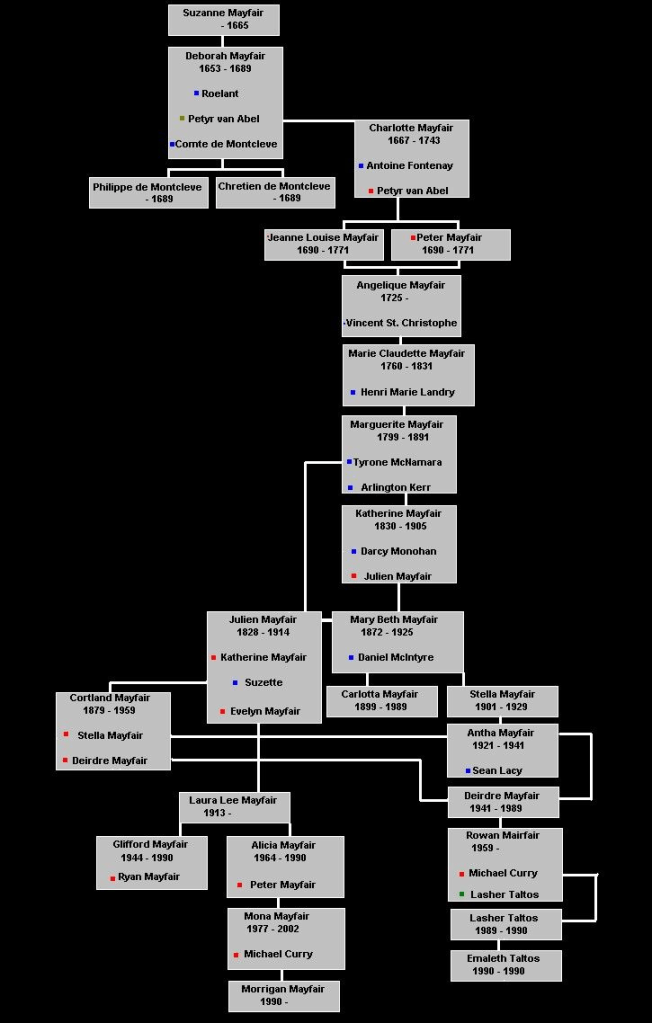
Anne Rice’s The Witching Hour (1990), The Lives of the Mayfair Witches is easily the hardest of all Anne Rice books to summarize and as such adapt. But I shall do my best. The best direct well-known parallels I can give for it are We Have Always Lived in The Castle (1962) by Shirley Jackson, Flowers in The Attic (1979) by VC Andrews, Fire and Blood by George R R Martin (2014), Frankenstein (1818) by Mary Wollstonecraft Shelley and Justine: misfortunes of virtue its companionJuliette: vice amply rewarded (1797) by (Citizen/Marquis) Donatien de Sade all at the same time.
In the present, by Anne Rice standards of the present: 1990s, Deirdre Mayfair, a victim of especially vicious child abuse, a patriarchal controlling society, biphobia, misogyny and of the last generation of women in the United States to be condemned to the asylum, shut away for daring to feel anything, including sexuality, and traumatized by her familial history, what little she knows of it and the preternatural entity, Lasher.
“Everywhere I looked, I thought I beheld a face and figure, only to discover that it was a trick of the darkness—the banana trees shifting in the breeze, or those giant red flowers drowsing on their weak stems as they hung over the fences bordering the road.” – Michael Curry, The Witching Hour (1990), by Anne Rice
Dr. Rowan Mayfair, a skilled neurosurgeon who sleeps with whatever man (and probably anyone else) she wants, deliberately kept in the dark of the fact of her parentage and her biological family line. Until on her boat in San Francisco one day, she revives Michael Curry from the dead thus giving him psychic powers for now our closest 1:1 Anne Rice self-insert and the primary audience point of view character. They then proceed to dance around one another, in avoidance, until they cannot anymore and they both unravel each other.
“Only our capacity for goodness is as fine as this silken breeze coming from the south, as fine as the scent of the rain just beginning to fall, with a faint roar as it strikes the shimmering leaves, so gentle, gentle as the vision of the rain itself strung like silver through the fabric of the embracing darkness.” Michael Curry, The Witching Hour (1990), by Anne Rice
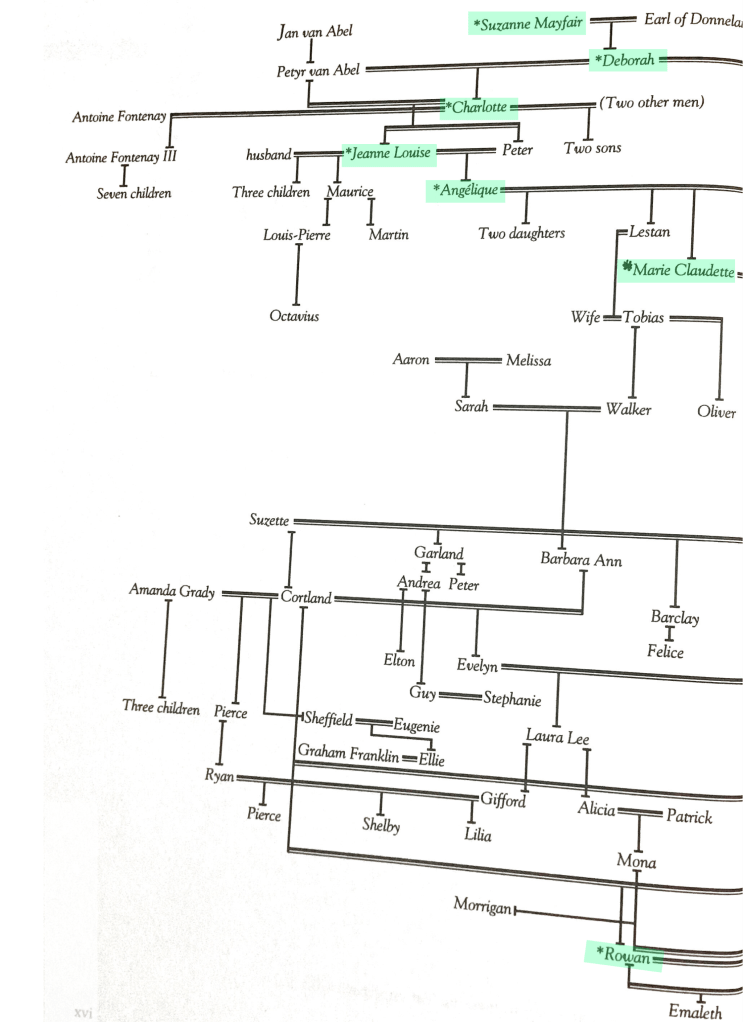
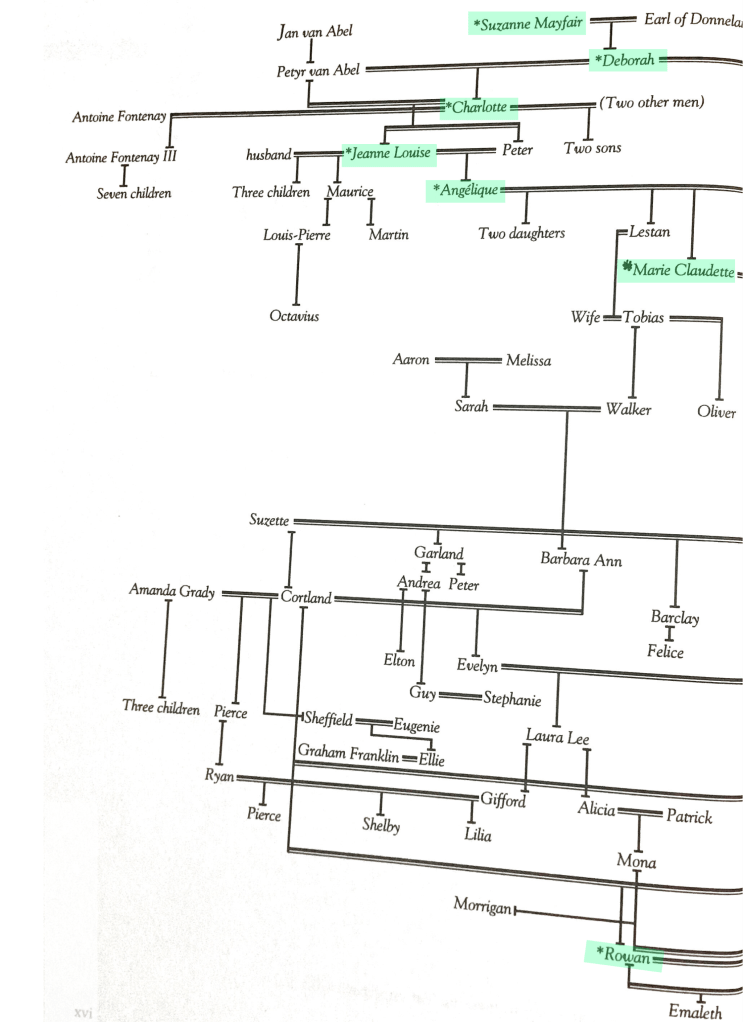
Michael Curry receives a call that he is to return to New Orleans, in the Irish Channel where he grew up. Dr. Rowan Mayfair receives a call about her biological mother, Deirdre Mayfair. Aaron Lightner, a Talamasca agent whose realm of preternatural psychic detective study, history and historiography is the Mayfair family of 1239, approaches Michael Curry, explaining he can help Rowan, being a sincerely well-intentioned man and well out of his depth on his own Michael Curry accepts. Aaron Lightner then gives Michael Curry the file of the Mayfair Witches, property of the Talamasca, and the letters of Petyr Van Abel. The Mayfair file, which makes up most of the book is a most thorough examination of various cycles of violence, regardless of gender, the social evil of choosing to plug one’s ears, close one’s eyes and look away and why constructing an “other” be it an alleged witch or otherwise is an abhorrent thing to do. Soon Dr. Rowan Mayfair calls back about her mother’s funeral, they go to Deirdre Mayfair’s funeral, and within the last third of the book Dr. Rowan Mayfair is stripped of quite a lot of the principles she presumed herself to have, has fallen victim to the appeal of money, and an idea of family and is so tired and traumatized as it is when the Taltos Lasher gaslights her by pleading for her help, she agrees. Despite knowing what happened in the Mayfair file and being thoroughly scientific, atheist, and believing herself exempt to an extent despite her inability to read other humans because of her scientific method, unlike Michael Curry who puts Louis de Pointe du Lac and Nicolas de Lenfent to shame in the long suffering, self punishing Catholic department. Lasher is birthed into existence and the being Lasher, and Dr. Mayfair left the United States. At the end of the book, Michael Curry is left mostly alone, in the haunted house on first street, waiting for his wife Dr. Rowan Mayfair to come home and despite all that has transpired, including nearly drowning twice, and all he now knows and cannot unsee still chooses to see the belief in the best of humanity, even though the worst evil is most certainly in humankind, especially the Mayfair family and states as much in a most secular way, because of all he learned, by choice or not from Dr. Rowan Mayfair and the file of the Mayfairs of 1239 First Street, Garden District.
“And once again, he spoke, ‘Call me by my name, Suzanne.’ ‘Lasher,’ she said, ‘for the wind which you send that lashes the grasslands, for the wind that lashes the leaves from the trees. Come now, my Lasher, make a storm over Donnelaith!’” – Lasher, The Witching Hour (1990), by Anne Rice
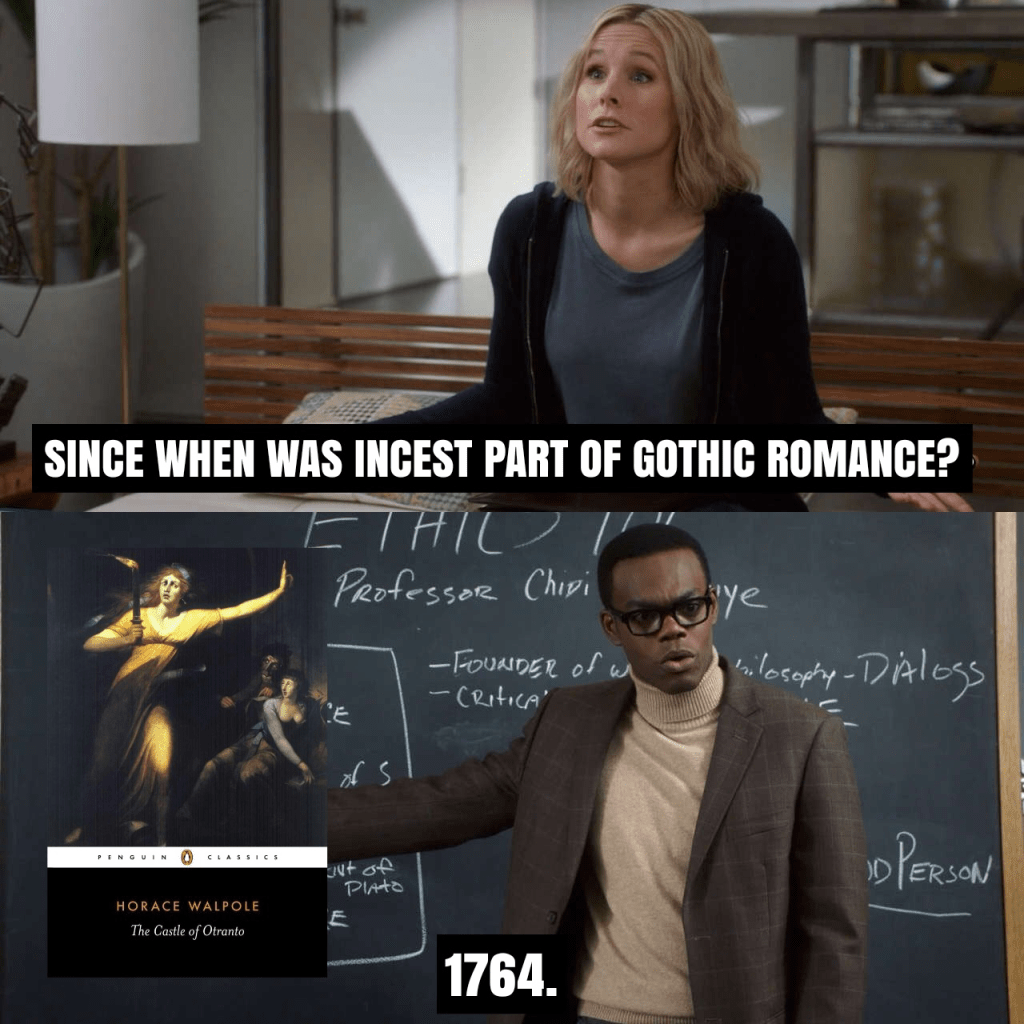
Of course I am biased. The Vampire Lestat and The Witching Hour are two of my favourite books of many favourite books and certainly of everything Anne Rice ever wrote. Still, I maintain everyone should read them preferably multiple times. Not for unanimous agreement — that is most certainly a fiction but to have a sincere conversation with the questions they are asking you as an individual and what lessons you can apply in real life from them, and because horrors, death, incest, sexuality and that deemed to be transgressive on a fictional page can only hurt you as much as you permit them too. After all, real life wealthy Southern “white” (European) families did far worse to Black, Jewish and global majority peoples in real life. Many still do. No change comes when we burn witches, or subject others to the all too human violence done to us by other people.
“And I suppose I do believe in the final analysis that a peace of mind can be obtained in the face of the worst horrors and the worst losses. It can be obtained by faith in change and in will and in accident; and by faith in ourselves, that we will do the right thing, more often than not, in the face of adversity.” – Michael Curry, The Witching Hour (1990), by Anne Rice
Works Cited
Andrews, Virginia C. Flowers in the Attic. HarperCollins, 1988.
Brand, Emily. The Fall of the House of Byron: Scandal and Seduction in Georgian England. John Murray Press, 2020. Accessed 17 January 2026.
Cleland, John. Fanny Hill. Edited by Peter Wagner, Penguin Publishing Group, 1985.
De Sade, Marquis, and Guillaume Apollinaire. Stories, Tales, & Fables. Translated by R. J. Dent, Contra Mundum Press, 2025. Accessed 17 January 2026.
de Sade, Marquis, and Guido Crepax. Justine. Edited by Bernd Metz, translated by Stefano Gaudiano, Catalan Communications, 1991.
DiPlacidi, Jenny. Gothic Incest: Gender, Sexuality and Transgression. Manchester University Press, 2018.
Jackson, Shirley. We Have Always Lived in the Castle. Eminent Classics, 2023.
Jewitches. “Can you even be a Jewish Witch?” Jewitches Blog, vol. one, no. one, 2023. Jewitches.com, https://jewitches.com/en-ca/blogs/blog/can-you-even-be-a-jewish-witch. Accessed 17 January 2026.
Jones, David J. Sexuality and the Gothic Magic Lantern: Desire, Eroticism and Literary Visibilities from Byron to Bram Stoker. Palgrave Macmillan, 2014. Accessed 17 January 2026.
Maguire, Gregory. Wicked. HarperCollins, 1995.
Martin, George R. R. Fire and Blood: 300 Years Before A Game of Thrones. Random House Worlds, 2018.
Orwell, George. Nineteen Eighty-Four. Edited by David Harmer, Longman, 1991.
Polidori, John William. The Vampyre: (1819) By: John William Polidori. CreateSpace Independent Publishing Platform, 2016.
Rice, Anne. The vampire Lestat. Knopf Doubleday Publishing Group, 1985.
Rice, Anne. The Witching Hour. Random House Publishing Group, 1990.
Rice, Cristopher, and Eric Shaw Quinn, directors. Anne Rice an all Saints’ Day Celebration. 205. The Dinner Party Show, 2025. Anne Rice.com, https://www.annerice.com/COL.html?fbclid=IwY2xjawOVfBBleHRuA2FlbQIxMQBzcnRjBmFwcF9pZBAyMjIwMzkxNzg4MjAwODkyAAEeSFDcMmPkDS1pau8r51czVED7-eeUWvxqqGJbnpiGAaEGrQEBcd–Nl61nnk_aem_BAzRr9bTon-PldeIHhm6bQ. Accessed 17 January 2025.
Sade (de), Donatien Alphone François. Histoire de Juliette cinquième partie: Les Prospérités du vice. Editions La Bourdonnaye, 2014.
Shelley, Mary Wollstonecraft. Frankenstein, Or, The Modern Prometheus: The 1818 Text. Edited by Nick Groom, Oxford University Press, 2018.
Walpole, Horace. The Castle of Otranto: a gothic story. Edited by Wilmarth Sheldon Lewis, Oxford University Press, 1996. Accessed 17 January 2026.

Leave a comment