

Censorship, the useful and the insidious…
Censorship has been an issue since the development of society and was never a simple issue. Many have gone back and forth on if it is principled. On the one hand, censorship can quiet discourse often perceived as brutal or unwanted, it can protect children, it is viable in wartime, and it can fight disinformation campaigns. It can be used to lessen the effects of hate speech and libel. However, on the other hand, censorship also silences stories that need to be heard. An example is the banning in 15 U.S. states of “The Handmaid’s Tale” by Margaret Atwood, quieting discourse on reproductive rights. Another example is the silencing queer stories in the classroom with the “Don’t Say Gay” law in Florida.
Here, we will examine multiple perspectives on censorship in this paper and endeavour to reach a logical conclusion. We will assess the historical perspective of philosophers and look at the pros and cons of the issue to better understand how we can better society through an improved understanding of it.
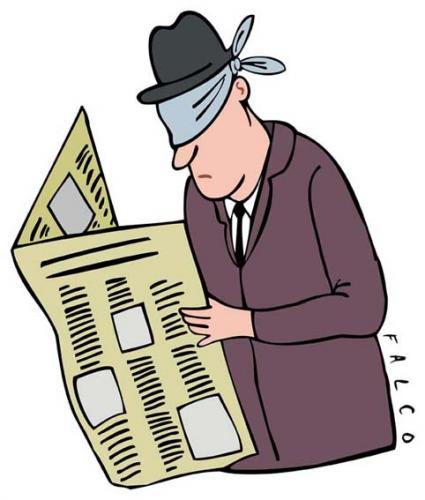
Ignorance & Censorship / Philosophy Tube
Perspectives of Political Philosophers
First, we shall look at three notable philosophical perspectives on censorship: John Stuart Mill (1807-1873), Charles Wade Mills (1951 – 2021), and John Bordley Rawls (1921 – 2002). John Stuart Mill was an English philosopher and social scientist who played a vital role in the arguments against censorship and laid the foundation for modern liberalism and free political and social spaces. John Stuart Mill’s central argument in chapter 2 of “On Liberty” is that a society needs to seek truth and have freedom of thought and expression to be a healthy society and advance (Mill, 2002). He contends that the suppression of speech is harmful not only to the individual but also to society at large. Here, we discuss three passages highlighting Mill’s view on censorship in developing a community.
First, if any opinion is compelled to silence, that opinion may, for aught we can certainly know, be true. To deny this is to assume our infallibility (pg.50).
John Stuart Mill (On Liberty)
In this first quote, Mill states that we will only know whether an opinion is genuine once publicly available and can be disputed or contested. Here, Mill is saying that to test the validity of an idea, we must subject it to public debate and have it be verifiable in multiple ways to learn the truth.
Secondly, though the silenced opinion is an error, it may, and very commonly does, contain a portion of the truth. Since the general or prevailing opinion on any subject is rarely or never the whole truth, it is only by the collision of adverse opinions that the remainder of the truth has any chance of being supplied (pg.50).
John Stuart Mill (On Liberty)
In the second quote, Mills asserts no one person has the entire truth and that humans are flawed and complex. However, through civil discourse and the exchange of opinions, we can more intentionally and deliberately come to a conclusion that gets us closer to the truth. In asserting this, Mill points out the fallibility of us all. To get to the truth, we must have public and civil discourse about it, for no human is infallible, and we are all pursuing the greater truth.
Thirdly, even if the received opinion is not only accurate but the whole truth, unless it is suffered to be, and is, vigorously and earnestly contested, it will, by most of those who receive it, be held in the manner of a prejudice, with little comprehension or feeling of its rational grounds. Not only this, but, fourthly, the meaning of the doctrine itself will be in danger of being lost and deprived of its vital effect on the character and conduct: the dogma becoming a mere formal profession, inefficacious for good, but cumbering the ground and preventing the growth of any honest and heartfelt conviction from reason or personal experience (pg.50).
John Stuart Mill (On Liberty)
In this segment, Mill states, that if an opinion goes unchallenged it is subject to become dogmatic and thus useless to the greater society. For a truth to be true, it is necessary to uphold the greater truth and to challenge said notion, lest it become built into the dogma of society, or, unquestioned and therefore a useless truth.
Next, we turn to Charles Wade Mills. Charles Wade Mills was a 20th-century political thinker who wrote extensively on race, social awareness, and anti-censorship. He is best known for “The Racial Contract” (Mills, 1997). To understand Mills, we need to understand Rawls, another noted philosopher. In his 1971 book “A Theory of Justice” (Rawls, 1971), American philosopher John Rawls said that in an ideal world, one should make social decisions from an original position behind a “veil of ignorance”, only giving people all they need to know and no further information. In short, it keeps people separate from the society they are, in this thought experiment, reforming. This idea means one should disregard all personal characteristics, social and historical circumstances, and potential social standing. Under the veil of ignorance, no one knows anything about themselves – their gender, age, wealth, intelligence, or abilities. The veil of ignorance is a central part of Rawls’ more extensive theory of justice, which seeks to define the principles of a just and fair society. In opposition to Rawls, Charles Mills said that a “veil of ignorance” doesn’t work as it fails to account for an individual’s social biases, such as gender, race, assigned sex, and cultural upbringing as Mills elaborates on in “The racial contract” (Mills, 1997).
Throughout history, many examples of societies benefitting from a better idea of the truth exist. As an example, take the protestant reformation and Luther’s rather loud and, at the time, controversial criticisms of the Catholic church. It was not popular then but necessary because of church corruption. The main idea behind freedom of speech is to promote fairness and impartiality in decision-making. Mill states it is the job of the press and the people to criticize governments and hold potentially corrupt individuals and systems accountable. Mill believes this is true even if you do not like or agree with a news site; it still has a right to exist, state its stance, and likewise be criticized and fact-checked by the people. Further, Mill suggests that false or unpopular ideas should be allowed to be expressed because they reinforce the understanding and appreciation of the truth by contrasting with wrong things (Mill, 2002). The opinions of John Stuart Mill and Charles Mills strengthen the idea that truth-seeking is integral to a just society.
Effectiveness of Censorship in the Modern World
Now that we have a historical context, we look at two real-world examples of censorship, starting with China, giving a clearer view of censorship as an issue. In present-day China, censorship of groups viewed as dissenting is routine. Information is also kept behind a firewall. The Great Chinese Firewall was implemented 1980s through government policies to control information outside China.
Whilst important to Chinese national interests and security, in Chen and Yang’s study, “Brave New World or 1984?” (Chen & Yang, 2019), the authors tried to assess the various impacts of censorship and self-censorship when Chinese students were given access to software to get around the Chinese firewall. The study consisted of a control group of students who regularly consumed the internet without access to a censorship defeat tool and an experimental group given access to a defeat tool. The information obtained from the internet shared between participants was also monitored. Attitudes about sensitive topics were also measured through a questionnaire. Knowledge about sensitive topics was assessed in 18 months, and information sharing was analyzed. The study found that the group given access to pieces of information views changed subtly from what they were before. More telling, a degree of self-censorship was noted where knowledge of government censorship laws was seen to limit the sharing of sensitive information.
A second study from China validated the results of the first. The study was titled: “Implicit and Explicit Control: Modeling the Effect of Internet Censorship on Political Protest in China” (Lu & Zhoa, 2018). The study was conducted through a web survey of University students in China with 2188 participants. The results validated the Structural Threats Theory: This theory categorizes threats as both seen and unseen. In the study, the key variables were the degree of Awareness of Internet Laws and Regulations and the Degree of Psychological Perception of Internet Censorship. In short, awareness of censorship laws was shown to do more than the censorship itself, as awareness of potential backlash leads people to self-censor.
In both studies, the dominant factor was the group of people who chose to self-censor, even if they only had a passing familiarity with the law. Censorship proved to work, but especially when individuals had a perception of censorship, they would then self-censor to avoid getting in trouble. These two studies show that censorship can be effective if it creates a culture of self-censoring.
In a third study, a potentially positive use of censorship was explored. The results agreed with the Chinese study. The study, “Fighting Propaganda with Censorship: A Study of the Ukrainian Ban on Russian Social Media” by Yevgeniy Golovchenko (Golovchenko, 2022), examines the impact of Ukraine’s 2017 ban on several Russian websites, including VKontakte, one of Ukraine’s most popular social media platforms. To combat Russian military propaganda, the Ukrainian government censored such topics as Russian military propaganda and pro-Russian rhetoric. The censorship policy significantly reduced activity on VKontakte, even though most users could circumvent the ban. This reduction affected users with strong and weak political and social affiliations to Russia. Initially, researchers thought that pro-Russian users would be more affected by the ban due to political loyalty or fear of being labelled unpatriotic. The findings were that censorship worked to decrease pro-Russian activity and let fewer people use the apps. It affected everyone regardless of loyalty. Both studies, conducted in China, as well as the Ukraine example, showed the effectiveness of censorship, but most of all, the effects of self-censorship on society.
US Examples of Censorship
Censorship is not just an issue overseas. The U.S. has examples of censorship as well. In one case, the Handmaid’s Tale by Margaret Atwood is banned in 15 states. Margaret Atwood is a Canadian author who wrote a dystopian novel in which women are stripped of reproductive rights and treated as objects. The states that banned it claimed they were doing so because of its “sex, profanity, queer representation, and being offensive to Christians” (Newsweek, 2017). In a study by Lili Leitner (Leitner, 2023), the author explored themes in the books and their relevance to modern society. The Handmaid’s Tale has long been a book held up by feminists for depicting an alarmingly realistic dystopia. Lili Leitner discusses the key themes that are important to learn in modern society, including the negatives of state-fostered ignorance, the importance of resistance in totalitarian regimes, and the importance of knowledge. Leitner’s study explored the detrimental nature of banning books. As The Handmaid’s Tale illustrates, fiction can serve to both inform and empower and is important to international understandings of social issues.
In another example of censorship in the U. S., queer voices in classrooms are being silenced (Rafei, 2022). On March 28, 2022, the Florida legislature passed the “Parental Rights in Education” act, also known as “Don’t Say Gay”. The goal of this bill is to ban the teaching of gender orientation and sexual identity before the fourth grade. In a legal study, UCLA surveyed 113 parents in Florida, 88% of them faced anti-LGBTQ+ harassment since the passing of the bill (Goldberg, 2023). As many as 16% had taken steps to move to another state. The tangible damage shown by the bill demonstrates how censorship is not simply an overseas issue, but, something we must grapple with at home and in our neighbouring countries as well.
Discussion on Censorship
So far, we have discussed the political philosophers’ views of censorship. We also discussed censorship in our modern world and its use and effectiveness. We can now weigh censorship’s relative pros and cons in the contemporary world.
In the pro-censorship argument, it is essential to remember that censorship is sometimes valid. Censorship can protect children, can be viable in wartime, and can fight disinformation. As an example, in the case of pornography, one in 25 children (10-17) will receive an online sexual solicitation (Stop It Now, 2023). Furthermore, 10,000 people are convicted of possession of child porn every year. Society needs to protect children and has an interest in censoring pornography. Censorship can also protect State secrets during war. An example of this is in the 1940s when we were constructing a nuclear weapon before the Nazis (Nolan, 2023). Additionally, censorship is sometimes necessary as in our modern example of Ukraine and can effectively fight disinformation.
However, in the broader society, censorship is harmful. As the three philosophers discussed (Mill, Rawlins and Mills), our goal should be a just society. To do so, we must be aware of biases in our search for truth. Rawlins’s “veil of ignorance,” while well-meaning, will not work because upbringing builds biases into us. As Mill and Mills assert, the only way to have a fair and just society is to have as little censorship as possible.
Furthermore, as Lili Leitner’s study of The Handmaid’s Tale makes clear, exploring fictional themes is essential to developing a broader worldview. Fiction exists to explore fantasy, dystopia, horrors, and more. If we take issue with something very much not real, how can we make sense of what is true? Also, exploring these themes in fiction allows us to debate these questions in the context of how society should respond when these topics are raised. Perhaps guidelines are sensible, but outright banning any art, even if poorly written or warranting content warnings, only hurts an individual’s critical thinking and society.
Guidelines for representing specific topics would undoubtedly be helpful, but they should be seen as guidelines rather than strict rules. For, when you enforce strict regulations on creators, you get such damaging things as the Hays code, where “bury your gays” is expected (NPR, 2008). The Hayes Code came about due to Cold War paranoia. The Hayes Codes were guidelines for Hollywood films for what could be seen or not seen on screen. Using the Hayes code guidelines, creators were either not allowed to have LGBTQ+ characters, or, if they were they were villains or killed off. This served to only portray LGBTQ+ community as something to be avoided or feared (Rafei, 2022).
Viewed historically, censorship at its most basic level is the denying of free speech and the mass de-platforming of those seen as in defiance of the system. The ancient Greeks had a kind of free speech wherein every land-owning man could vote (Lee Jussim, 2021). As laid out by the founding fathers, the US Constitution’s First Amendment upheld free speech as a right of white men (Lee Jussim, 2021). An example of freedom of speech in early America is when Alexander Hamilton wrote against then-General Washington’s detractors (Lee Jussim, 2021). On the other hand, even “the great liberator,” Abraham Lincoln, put a few people in jail for political unrest at the start of the Civil War (Lee Jussim, 2021). But in theory, all of them supported a version of free speech.
Overall if our goal is a prosperous society that allows the most people to participate, we are left with the conclusion that free speech and no censorship is integral to that society. Controls on such speech should be questioned and used in extreme moderation.
Conclusion
My paper has discussed and summarized the pros and cons of censorship, descriptions of political thinking from several sides, and recent and historical context. Censorship, while complicated, tends to be more harmful. It has been shown to make small word views smaller and increase the effects of echo chamber-like thinking. For writers, it is much more personal, impacting livelihoods. For minority writers, censorship often seeks to erase their existence in the media. For publishers, it is likewise awful. For educators and librarians, it makes their tasks more difficult. Broadly and socially speaking, the erasure of certain groups enables social oppression to continue. Just because a reader finds the subject matter in a book uncomfortable is not a sufficient cause to ban it. As Mill and Mills have indicated, how else can we know the truth? Censorship, additionally, is a red flag for authoritarianism, and we need to hold governments accountable for withholding information and enabling harm to come to individuals in real life. Fiction seldom, if ever, affects reality. Just as asking difficult questions, as Atwood’s “The Handmaid’s Tale” does, is not a crime. Laws like those imposed in fascist countries, and even in the U.S., never solve anything. Fiction rarely impacts reality, and all thought-out criticisms are valid discussions.
Bibliography
Chen, Y., & Yang, D. Y. (2019). The Impact of Media Censorship: 1984 or Brave New World? The American Economic Review, 2294-2332.
Goldberg, A. (2023, January). Impact of HB1557 (Florida’s Don’t Say Gay Bill) on LGBTQ+ Parents in Florida. Los Angeles, California, USA: William Institute of Law (UCLA).
Golovchenko, Y. (2022). Ukrainian Ban on Russian Social Media. The Journal of Politics, 639-654.
Kays, E. (2012, May). Discussion of Censorship. Retrieved from The Handmaids Tale: https://handmaidtale.weebly.com/discussion-of-censorship.html
Lee Jussim, P. (2021, March 17). The Rise of a Culture of Censorship . Retrieved from Physcology Today : https://www.psychologytoday.com/us/blog/rabble-rouser/202103/the-rise-culture-censorship
Leitner, L. (2023). The Politics of Censorship in the USA: A Critical Analysis of the Case of the Handmaid’s Tale. Vienna, Austria: Central European University: Department of International Relations.
Lu, J., & Zhoa, Y. (2018). Implicit and Explicit Control: Modeling the Effect of Internet Censorship on Political Protest in China. Internationl Journal of Communication.
Mill, J. S. (2002). On Liberty, The Subjection of Women, and Utilitarianism. New York: Modern Library.
Mills, C. W. (1997). The Racial Contract. Ithica, NY: Cornell University.
Newsweek. (2017, April 28). Challenges and Bans of ‘The Handmaid’s Tale’ Aren’t Really Just About Sex or Profanity . Retrieved from Newsweek: https://www.newsweek.com/challenges-and-bans-handmaids-tale-arent-really-just-about-sex-or-profanity-591907
Nolan, C. (Director). (2023). Oppenheimer [Motion Picture].
NPR. (2008, August 8). NPR. Retrieved from Remember Hollywoods Hayes Code 40 Years On: https://www.npr.org/2008/08/08/93301189/remembering-hollywoods-hays-code-40-years-on
Rafei, L. (2022, June 27). How LGBTQ Voices are Being Erased in Classrooms. Retrieved from ACLU: https://www.aclu.org/news/lgbtq-rights/how-lgbtq-voices-are-being-erased-in-classrooms-censorship
Rawls, J. (1971). A Theory of Justice. Cambridge, Mass: The Belknap Press of Harvard University.
Stop It Now. (2023, November). Stop It Now! Retrieved from https://www.stopitnow.org/

Leave a comment