

Mortality, Bisexuality, Monstrous Love and The Outcast.
Mortality or death is universal. Sooner or later it comes for all living creatures. It should be the great equalizer. However, the way death is perceived varies widely from culture to culture. In South Asia, especially the Indian subcontinent the Hindu concepts of Dharma and Karma play a significant role in how the living perceives death. Death, in Hinduism, is not the end but rather a step in the cycle of reincarnation, additionally, cremation is the norm and white is a colour of mourning. Compared to western cultures of death, it is much less grim. In Christianity, death is the end and if you are lucky you become one with God. Burial practices vary wildly. In largely still Roman Catholic places like New Orleans, Louisiana shared family crypts and communal ‘oven’ crypts are standard practice. An oven crypt is a shared crypt for bones to bury people above ground, as New Orleans often rains. Compare this to Anglican England or France and the practice of Catholic adjacent burial will still be different. My Late Grandmother who was mostly Norwegian and Lutheran Protestant was cremated and interred at her funeral a couple of months later. All that is to say, death and the perception of it vary dramatically from culture to culture. But death is a complex idea as are our grief and mourning. Cultural and pop culture characterizations of death are complicated.
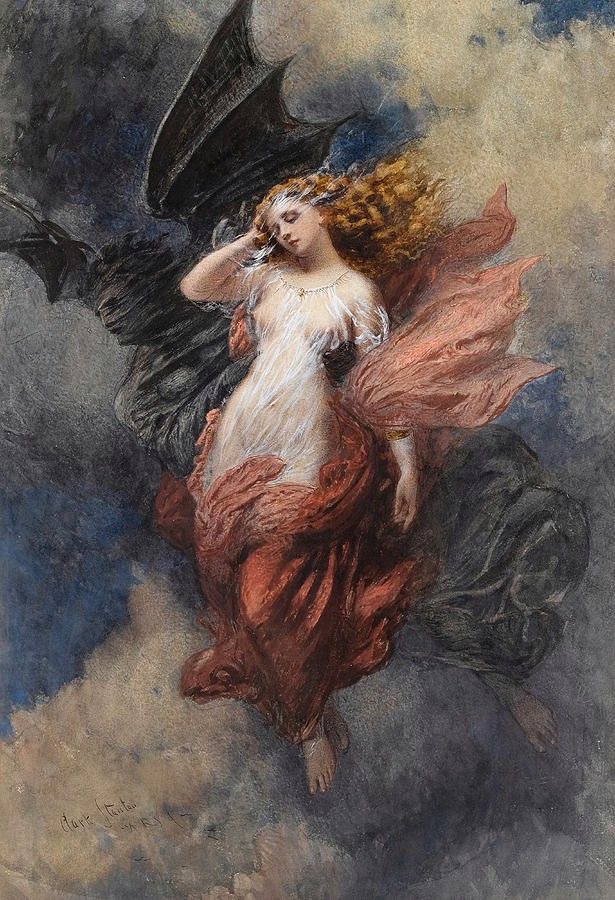
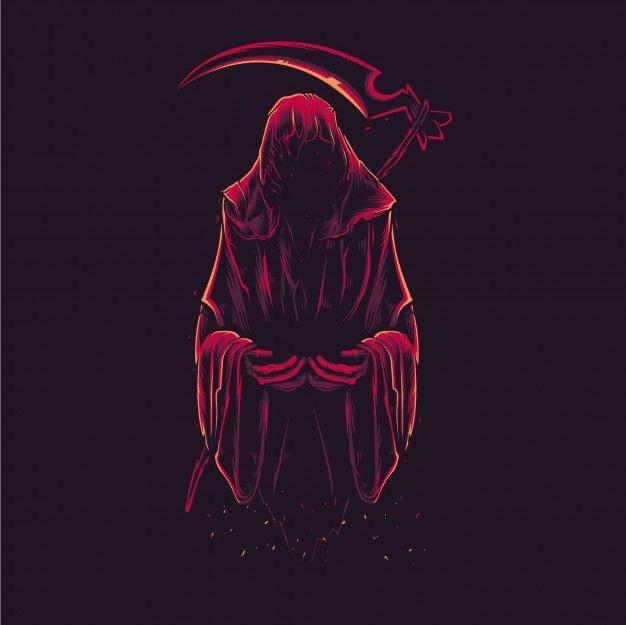
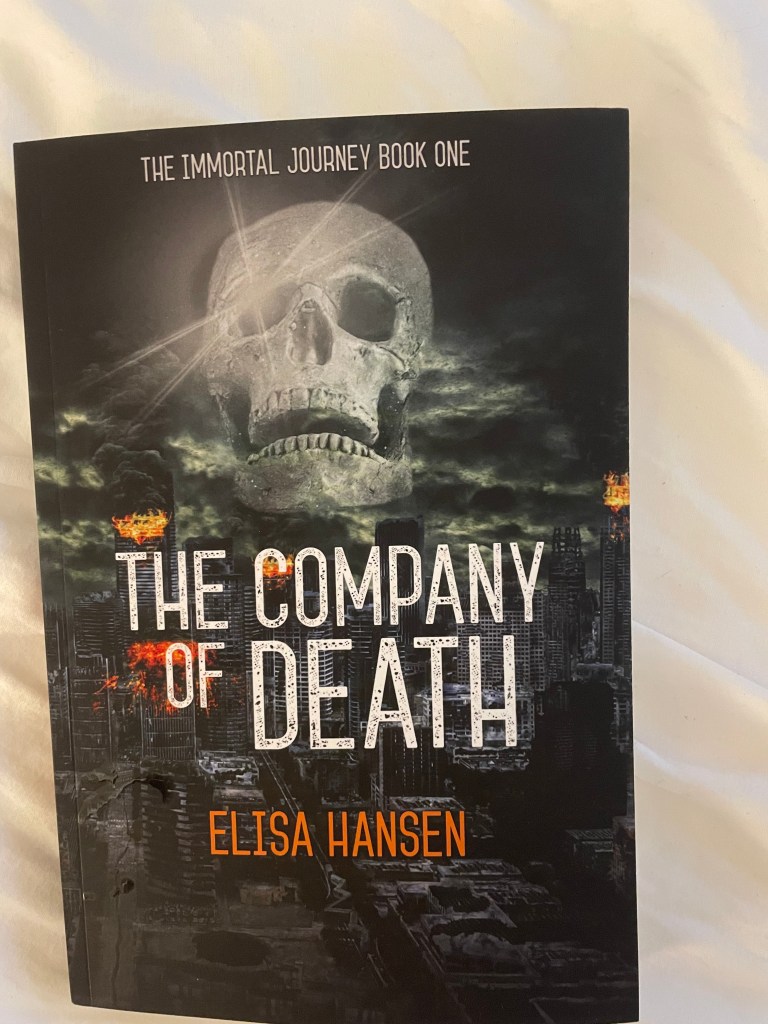
The Grim Reaper is often either excessively brooding or off puttingly cheery. As described, the reaper reaps souls with a scythe dressed in black and is a human-like entity. This version of death is most often a he/him and described with masculine descriptors. Death and the maiden is a motif in traditional western art consisting of a death like or death adjacent figure and a young maiden. It is a version of a vanitas and the danse macabre popularized in an 1874 song by Camille Saint-Saëns. Thanatos is the one in Greek mythology who guides the souls to the underworld with the help of Hermes. Hades rules the underworld with his Dread Queen, Persephone. Hades and Persephone is an early example of death and the maiden. Persephone, the maiden is stolen away or willingly goes with Hades in a story that is either a sexual assault or marriage allegory or similar to beauty and the beast. Death in literature takes many forms. In Sandman by Neil Gaiman, she is a loving sister and friend to Dream or Morpheus, our hero. Death of the endless cares deeply about humanity but someone has to do the unpleasant work. In The Company of Death by Elisa Hansen, he is a genderless formless neutral entity stuck in a male form with grey morals whose job it is to end lives when peoples time comes. Both of these are nuanced humanized portrayals of the notion of death and I think there is something poetically human about that especially as Death in company pays homage to death and the maiden.
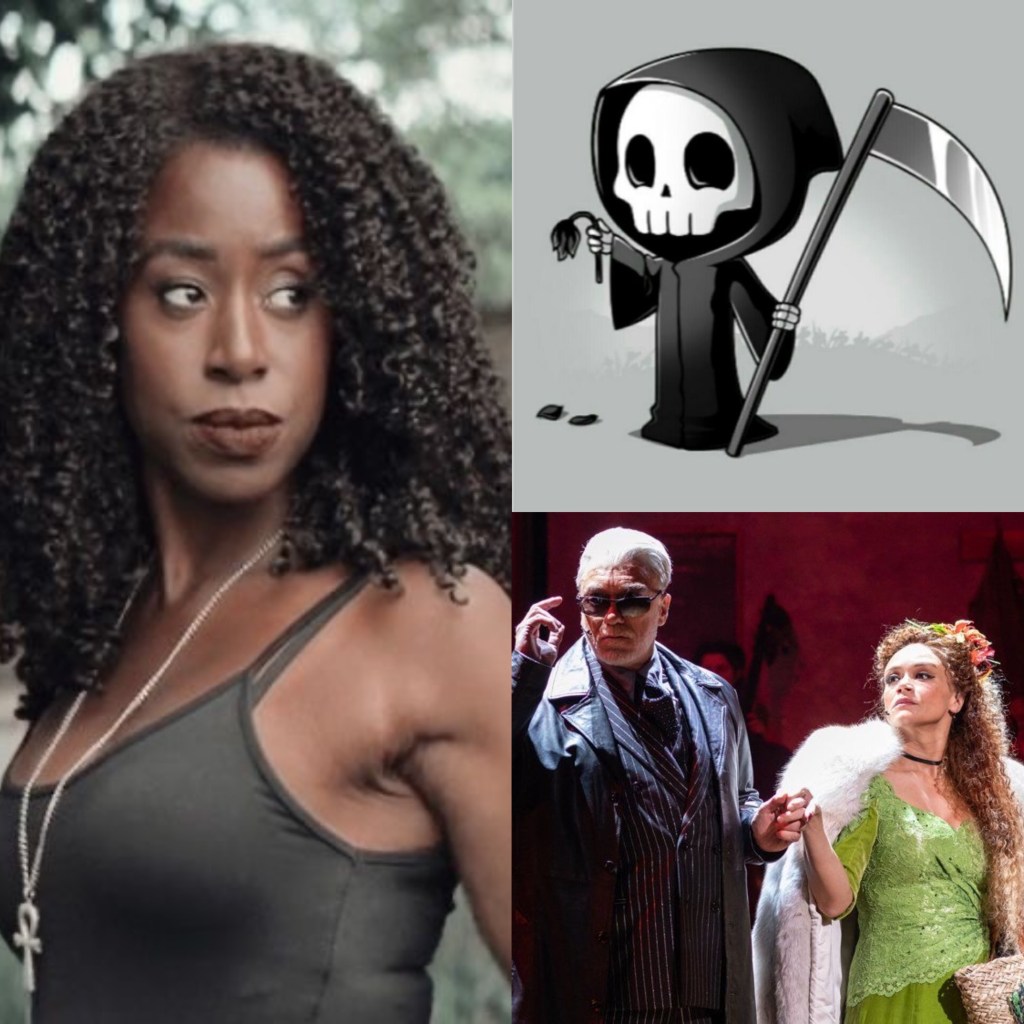
Monstrous love is universal. While queer people are most often the ones that relate to it. Love, like death, is a complex notion and can drive people to extremes and make monsters of us all. To be queer is simply be othered. The word “queer” is most often a self descriptor for lgbtqia+ people. As outcasts we are often frond on or told we are wrong for simply existing. Change is slow. Bisexuality is defined as attraction to two or more genders the word originating from a botany term. As a bisexual and queer I am attracted to women, men and gender non conforming people. All is to say death and love are very complex. Leif, the vampire The Company of Death is bi. He is attracted to women, men and others. He is also inspired by Anne Rice’s Lestat de Lioncourt, an iconic bi vampire to be certain. We do not know much about Leif yet, but he is a brat and persistent survivor. His allegorical meaning in the story is that of a counter culture. In Hansen’s world most vampires move together. Leif does not thus reinforcing his status as an outcast. Beyond being fun to write, his purpose in narrative is to give an informed non-human perspective and play up the gothic horror elements of the story. Leif is a rogue, bisexual brat and a lovable bastard and outcast. He is the vampire as the ultimate spiteful outsider. Leif is even an outsider amongst his own vampire kind, a brat and a charming rake of questionable morality and always on the run.
In conclusion, death, love, horror, bisexuality and queerness are very complex and will continued to be explored infintitely. There is much horror and cultural perceptions of issues and universal human experiences can teach us and that is why we should read.
Works Cited
“Ask a Mortician.” YouTube, https://www.youtube.com/@AskAMortician. Accessed 14 December 2022.
Eggener, Keith. “The fascinating history of cemeteries – Keith Eggener.” YouTube, 30 October 2018, https://youtu.be/8HegwRtbDSU. Accessed 14 December 2022.
Krystyna, Klaudia. “Guide to Death & Dying in Different Cultures Around the World | Cake Blog.” JoinCake, 30 August 2022, https://www.joincake.com/blog/death-in-different-cultures/. Accessed 14 December 2022.
“The Macabre Origins of the Grim Reaper (feat. @Caitlin Doughty – Ask A Mortician!) | Monstrum.” YouTube, 1 July 2021, https://youtu.be/r6-iARavKYQ. Accessed 14 December 2022.
“The Order of The Good Death.” The Order of the Good Death, https://www.orderofthegooddeath.com/. Accessed 14 December 2022.
Schettler, V. “On Fictional Tropes-Death and The Maiden | Every Writer Needs a Safe Place to Write.” Every Writer Needs a Safe Place to Write, 17 January 2017, https://lawfulevilnovelist.wordpress.com/2017/01/17/on-fictional-tropes-death-and-the-maiden/. Accessed 14 December 2022.

Leave a comment