


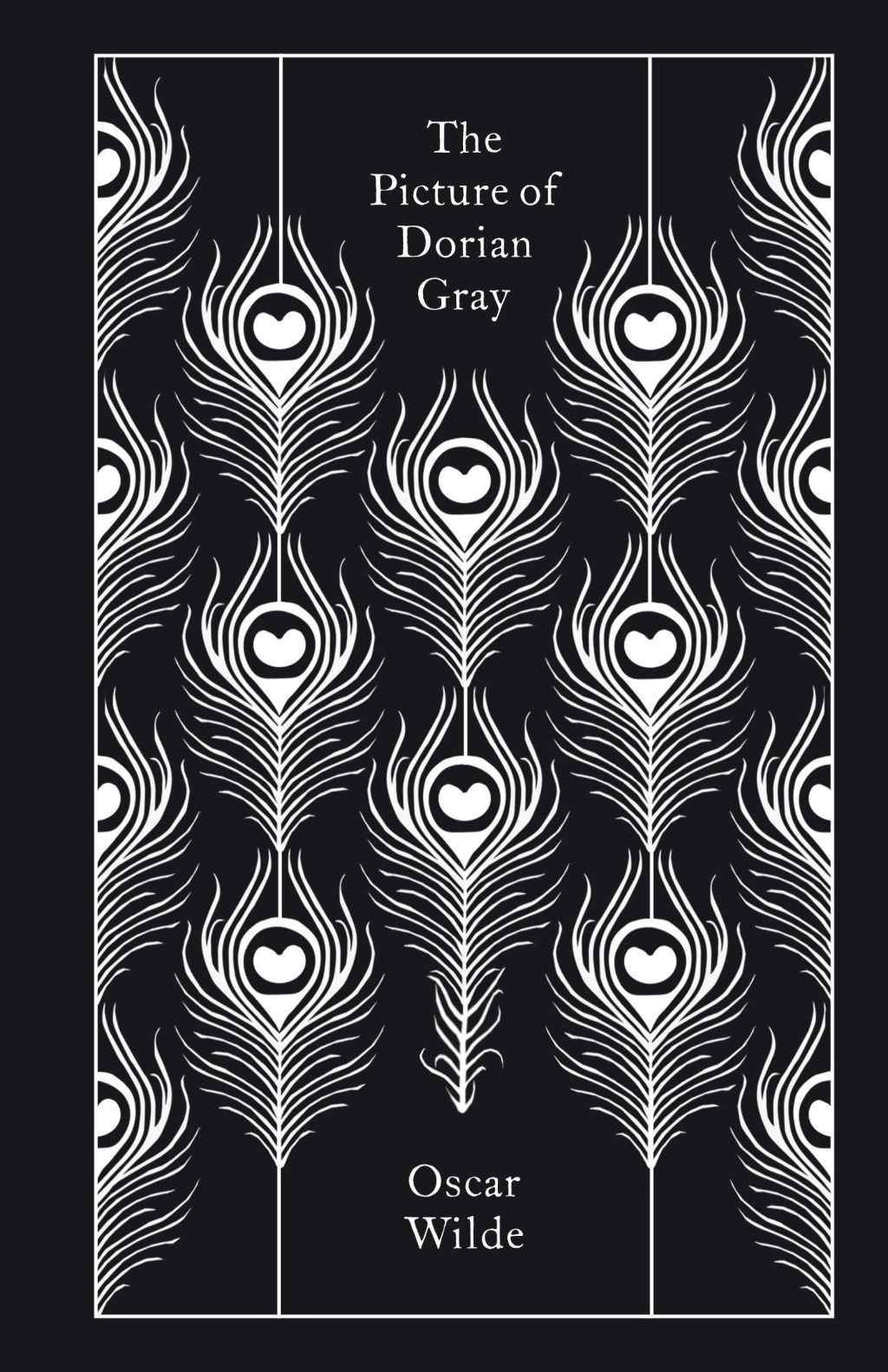
Oscar Fingal O’Flahertie Wills Wilde was an Irish poet, playwright, and writer who was popular throughout the 1880s and 1890s. He most notably wrote The Importance of Being Earnest and Lady Windermere’s Fan and a fair few other plays. After a few scandals and a libel case against the Marquess of Queensbury he was found guilty of ‘gross indecency with men’ and was subject to hard labor. He died of meningitis at the age of 46 in the year 1900 in Paris. The Picture of Dorian Gray Wilde’s first and only novel was published in July 1890 and republished in April 1891.
The Picture of Dorian Gray follows a young, blonde-haired, blue-eyed, ‘pretty’ young man by the name of Dorian Gray as he ruins lives and falls prey to unrestrained hedonism until he finally destroys himself. It starts the day Dorian goes to get his portrait finished by the painter and his friend Basil Hallward. When he goes to Basil’s he also meets Lord Henry Wotton, a man who means none of what he says who claims ‘youth and beauty are the only things worth having.’ It starts with a young working-class actress named Sibyl Vane and then Dorian goes on to ruin many lives. There’s not a man or woman in London that’s not either infatuated with Dorian or fears him and hates everything he represents. It all ends when Dorian unintentionally destroys himself by destroying his portrait.
“Give a man a mask and he’ll tell you the truth,” once said Oscar Wilde. The theme of The Picture of Dorian Gray is about the lies we tell ourselves and others and about how anything in extremes, especially hedonism is destructive. This is shown through Dorian Gray’s disregard for the lives of others and how is a slave to his whims with little impulse control. It starts with the actress Sibyl Vane and escalates slowly further, even taking the life of the painter Basil Hallward until it finally kills Dorian himself. Dorian’s portrait also illustrates this through it being the avenue Dorian escapes consequences through. As no one assumes anything since he’s outwardly angelic looking. It also is rather Faustian as he has to give his soul for his portrait taking on his sins, ills, and evils to come true. “There is no such thing as a moral or immoral book, books are well written or badly written that is all,” to quote Wilde once again. This book was scandalous at the time for its gay, bisexual, and pansexual subtext and its bi-male lead, Dorian Gray. It was even used against Wilde as evidence at his trial. To close, this book still resonates with many lgbtqia+ readers and none lgbtq+ readers today for its sense of style, its poetic language, and notable witticisms and its mark on the English canon and lgbtq+ style and subculture. I give this book 4.5 stars out of 5.

Leave a comment