



An incredibly brief history of vampires as it relates to The Company of Death by Elisa Hansen.

First written in English as John Polidori’s The Vampyre: a tale in 1816, The earliest recorded folklore we have of vampires in the western world are from Europe, what is now Romania and Transylvania specifically. That said bloodsuckers as monsters exist in every culture in the world. Vampirism as we understand it comes from the allegorical fear of the unknown, the other, queerness (LGBT+) as well as misconstruing the aftermath of death as well as consumption and yellow fever.

One night in Geneva, Lord George Byron of bisexual/biromantic fame to some, infamy to others challenged his friends including, Mary Shelley and his doctor and (most likely) bitter ex lover John Polidori, to write macabre gothic tales. Mary Shelley produced her first draft of Frankenstein: the modern Prometheus. Polidori drafted The Vampyre: a tale While until recently The Vampyre: a tale was attributed to Lord George Byron himself it was in fact Polidori’s work. Lord Ruthven the notorious titular vampyre and first bisexual/biromantic bloodsucker was our first Western literary bloodsucker and certainly the first English one. The first Black vampire story was The Black Vampyre: a legend of St. Domingo and used the vampires blackness and bisexuality/biromanticism to other them and justify murdering them, thus illustrating the vampire as an outsider. What made Lord Ruthven different from his Transylvanian counterparts? Well, Lord Ruthven is a regency gentleman, a ladies man, a lover of men and women (and everyone in between), a literal and social ‘lady-killer’ a charming rake. It is from this the reader get the basis for the likes of Count Dracula and in part, Lestat de Lioncourt and Leif the wanderer. The vampire hasn’t yet acquired their paleness yet that was the invention of Bram Stoker. Lord Ruthven is very human despite being an other, and a monster. He blushes, he feels immense pain emotionally and physically and he appears very human, ruddy with fresh blood. But, vampirism is far more than just an allegory for well-to-do, bisexual/biromantic, who are also judged to be ‘amoral’ men.

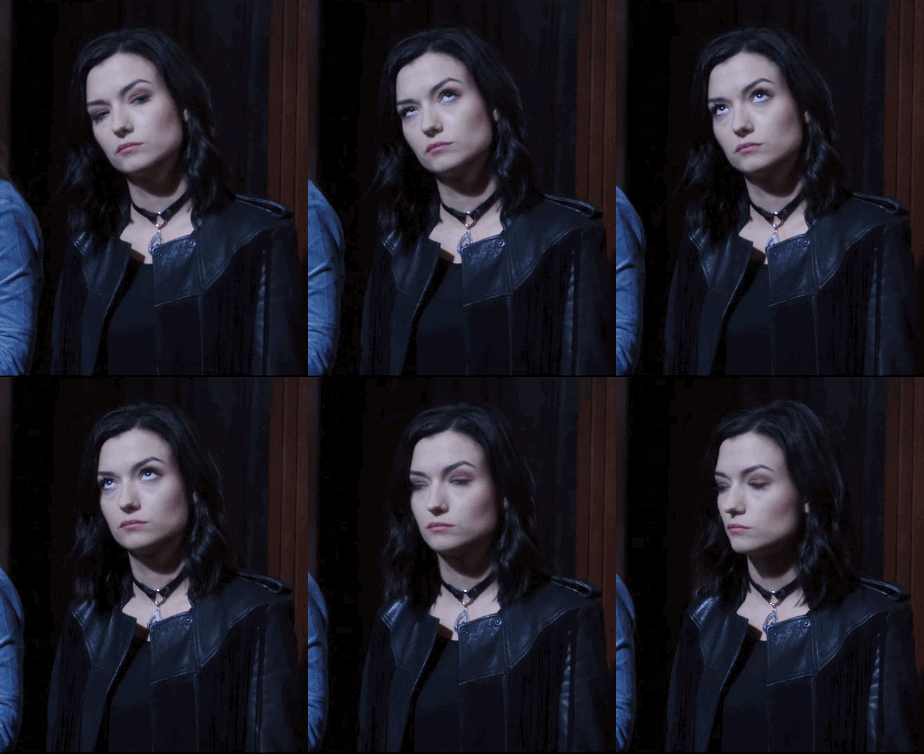
Vampires are a mirror to many a human fear, and always have been. However, few vampires illustrate this as well as Countess Carmilla Karnstein, the first well known, widely published vampire lady and the first lesbian (as in wlw/nblw given historical context queer to be sure) vampire. Carmilla Karnstein of Styria. Although it is heavily debated scholars of the gothic, whether or not Carmilla is bisexual/biromantic or a lesbian. I a bisexual/biromantic always personally interpreted in the 1872 novel, the vampiresCarmilla along with Marya Zaleska (another sapphic vampire as well as Dracula’s daughter in Dracula’s Daughter 1936) as a lesbian. Carmilla compared to Lord Ruthven is far more melancholy, brooding, the inverse of the ‘manic pixie dream girl’ trope, as well as less textually overtly hedonistic and LGBT, far more prone to self hatred, self harm, ‘moderation’ and to spiral into self destruction unlike Lord Ruthven who based upon Lord George Byron, the basis of the Byronic hero or anti-hero trope. Life of the party. Rule and social more breaker. Bisexual/biromantic and hedonistic to cope with their depression. The novel Carmilla (1872) is narrated by Laura Hollis, a young girl (bi coded) who Carmilla slowly preys upon and in many people including my own reading falls in love with until Carmilla is discovered to (to like none men) and Laura learns she’s always been a vampire. Subsequently, the hyper masculine men in this story kill Carmilla for this ‘unholy breach of heteronormativity.’ Laura also learns what we the audience suspected the whole time, that Carmilla was once a long time ago, Countess named Mircalla. In both the case of Lord Ruthven and Carmilla it is the vampires overt queerness (LGBT+) status that is villified and subsequently used to justify hunting them down. It is there societal connections to European historical aristocracy and by proxy, European colonialism that enable their leech adjacent behaviour.
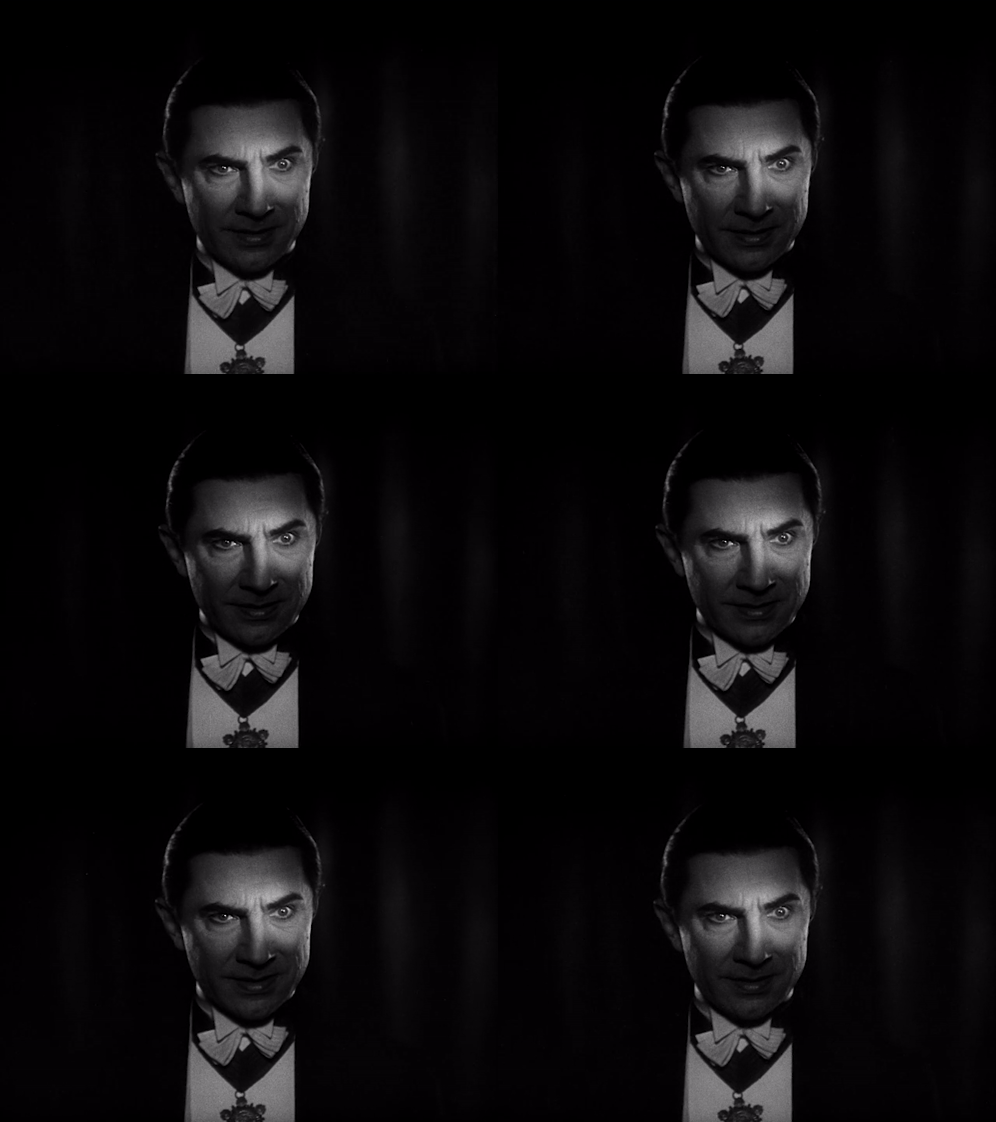
Now, the famous one, Count Dracula. Dracula by Bram Stoker, published in 1897 drew upon the many fears of the vampire narratives that preceded it. The infamous Count allegedly based on Vlad II The Wallachia ‘the impaler’ actually shares more in common with Stoker’s contemporaries the actor Henry Irving and Stoker’s college friend, Oscar Wilde. Dracula in the novel is a rich eastern european nobleman with a large nose and a moustache (negative Jewish coding) who grows younger the more blood he drinks. Dracula is also bisexual/biromantic leaning into Stoker’s internalized biphobia, homophobia, and collective moral panic following the arrest of Oscar Wilde.
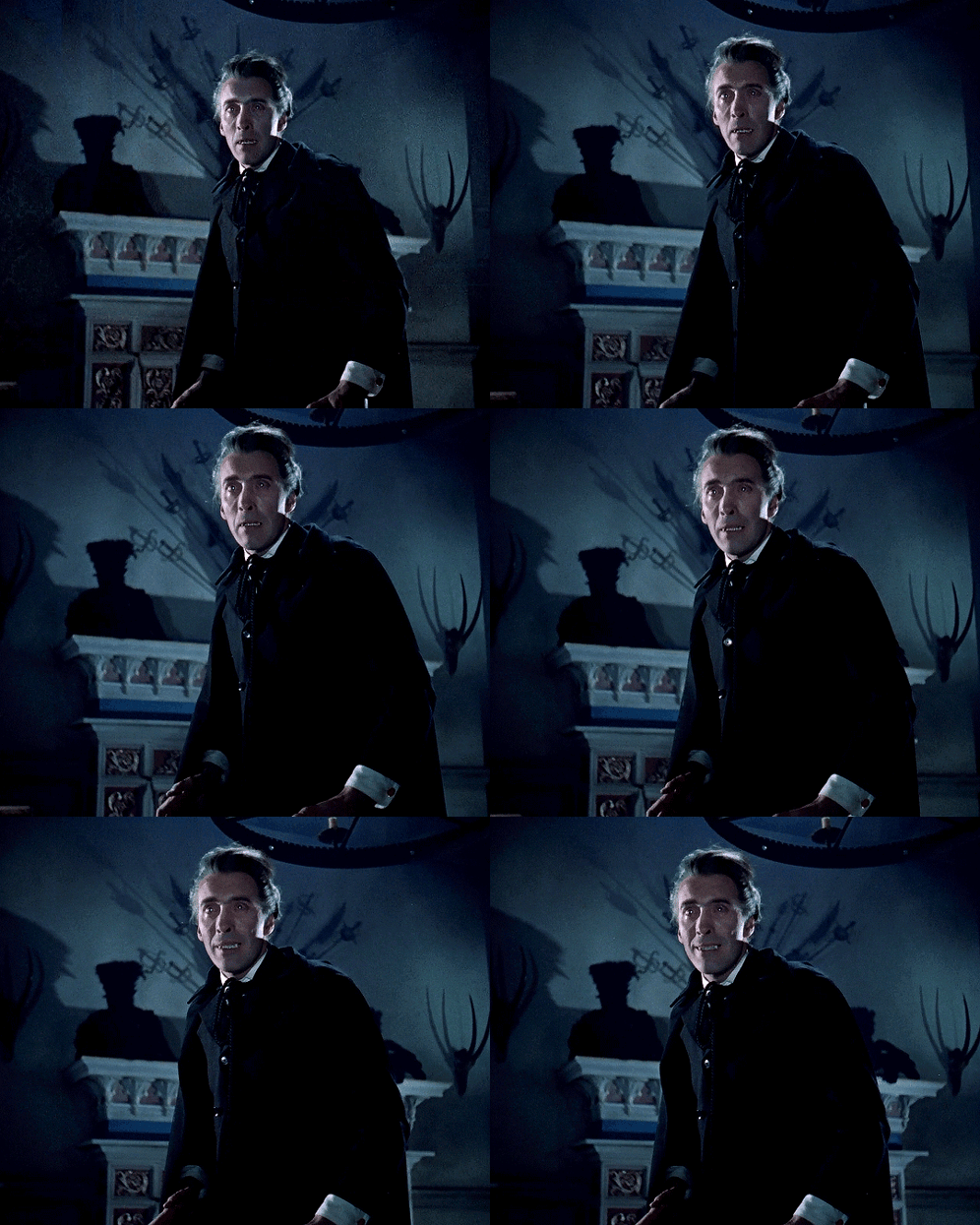

The titular vampire, Count Dracula also keeps a ‘harem’ or ‘polycule’ depending on one’s reading of the three brides who are themselves reverse motherhood, demonic femininity. Age old Christian blood libel, against Jewish people, murdering babies and children. Dracula murders Lucy Westenra, an innocent engaged english ingenue and reverse baptizes or allegorically enacts sexual violence on Mina Murray-Harker, the modern working woman, school mistress and wife of Jonathan Harker. This not only illustrates Dracula as an unrepentant deliberately malicious villain but also makes him inherently queer (LGBT+), a villain in equal measure for his Jewish coding, his being ‘other’ (Eastern European) and bi as he preys on Jonathan, Lucy and Mina this therefore sets the precedent for the vampire as a dangerous foreigner and ‘unrepentantly’ evil.
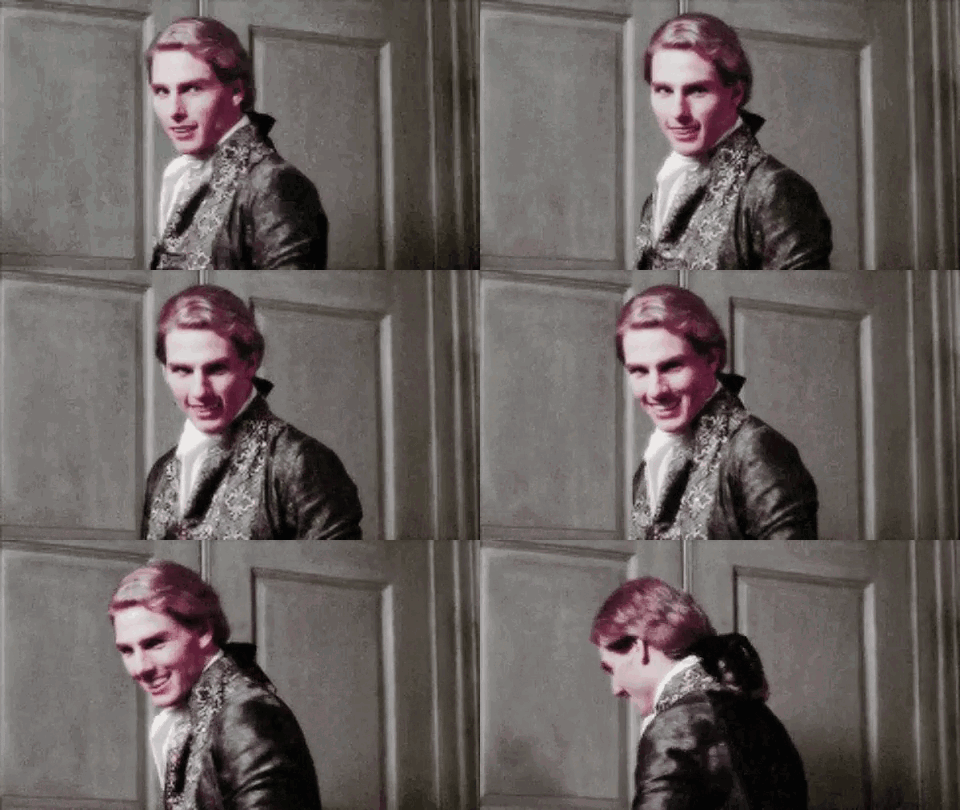
The vampire allegory wouldn’t regain its sympathetic qualities until Lestat de Lioncourt and his self titled ‘Coven of the articulate’ a the works of Anne Rice in the 1970s through the 2010s. Lestat de Lioncourt first became the side character to Louis de Pointe du Lac in Interview With The Vampire, in the 80s he became his own anti-hero starting with The Vampire Lestat and The Queen of The Damned and many more novels in the chronicles. Unlike his predecessors and like Louis in Interview With The Vampire Lestat de Lioncourt’s story is told from his perspective and the readers know about every moral crisis and every joy he experiences. Lestat de Lioncourt is evidently still monstrous as a vampire and bloodsucker but his capacity to love and persistence are his most redeeming qualities. Lestat is biromantic/bisexual (though deeply sensual Anne Rice’s vampires in the novels lose interest in explicit textual sex as the necessity to drink blood and the rapacious kill is simply more interesting to them aesthetically, physically and emotionally) with this in mind however, it is worthwhile to understand that Lestat being bi is not a tool to illustrate villainy, unlike the act of killing, or the allegorical and at one point very literal sexual assaults, he just is, unlike many bi characters throughout literary history it is never used to other him in the narrative. Rather, he has always been bisexual/biromantic. The core of Anne Rice’s vampires are their simultaneous monstrousness, humanity and how sympathetic they are layered alongside their bisexuality/biromanticism. Innate capacity to love and to think. Still monstrous, one cannot the social deprivation of killing or sexual assault. No longer however, is the vampire a scary ‘other,’ they are still an ‘other.’ Lestat is a monster but a damnedest creature you can feel for and sympathize with. A devil, too ‘good’ at being ‘bad’ In the words of the lady vampire Allesandra, “do demons not love one another even in the depths of hell?” (The Vampire Armand, Anne Rice, 1998)
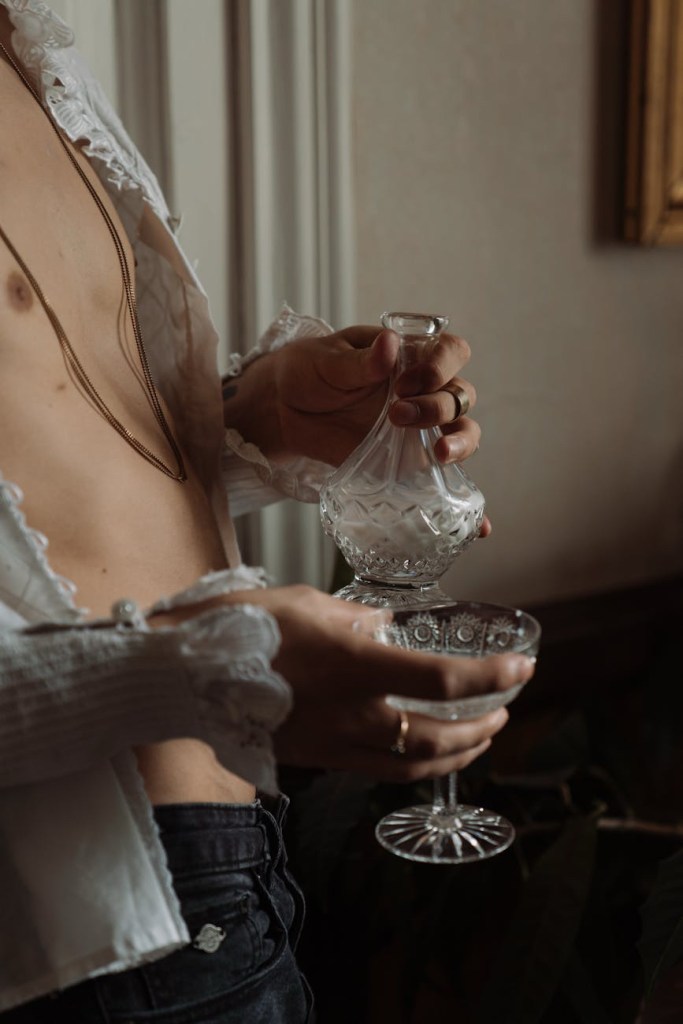
“In spite of all the refinements of civilization that conspired to make art–the dizzying perfection of the string quartet or the sprawling grandeur of Fragonard’s canvases–beauty was savage.” – The Vampire Lestat, Anne Rice, 1985
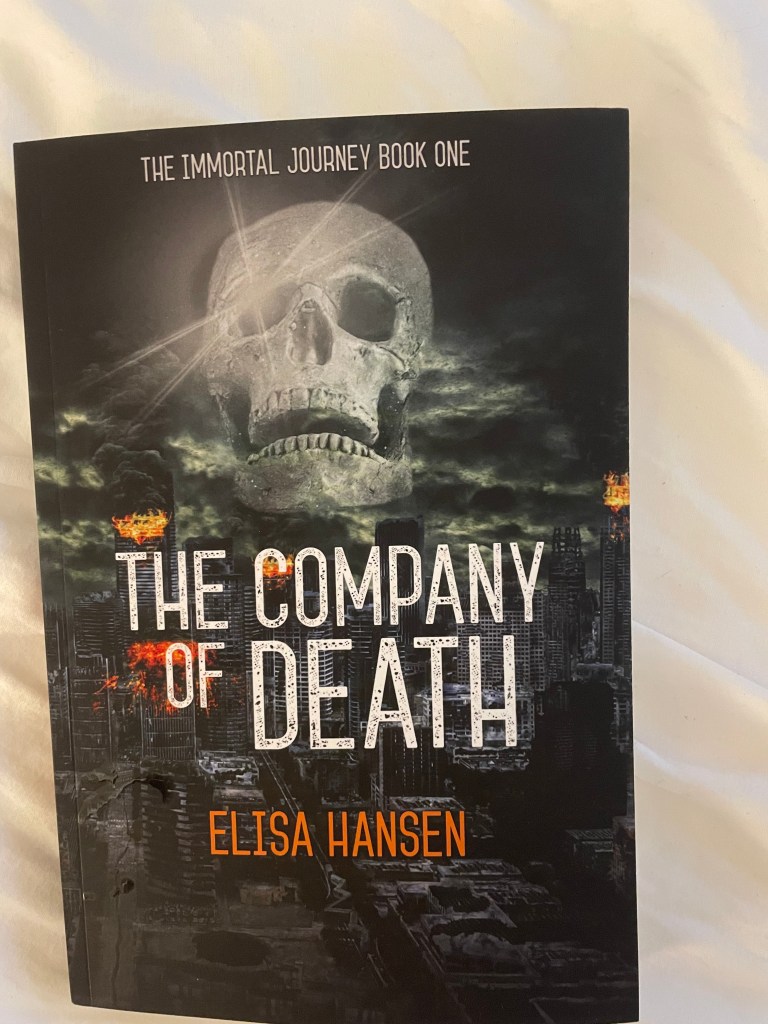

Leif the wanderer vampire in The Company of Death by Elisa Hansen aesthetically and by characterization and personality Leif draws most closely from Lestat de Lioncourt. Leif is 400+ years old, a rebellious brat, asexual spectrum as well as biromantic/bisexual and a charming fiend. The Compaby of Death is not for everyone and it has the pacing one excepts from the start of a trilogy. Baring this in mind however, Elisa Hansen puts their media critic degree to good use. There are aspects of all of the subsequent vampires in Leif, likely many not in this essay. The vampires in the Immortal Journey trilogy are absolutely an allegory in Hansen’s work if not also a heavy handed metaphor. Most all of them serve to show the in universe consequences for unrestrained greed, all except Leif comply with the destructive to all but the few lucky individuals who benefit from it social structure in advance and without questioning it. Though Leif is greedy and ‘amoral’ he has sympathetic motives: to survive and as a biromantic asexual man post the fall of society. As a vampire he is absolutely a monstrous outsider. Like Lestat, his most direct inspiration, though, the sort of Byronic, anti-hero, monster you wish to hug gently, in all that social more breaking complexity. Console before they drain you. In short, vampires are a very complicated and will always be explored they need our energy and blood and we need them as a mirror to our worst and best selves. “If I an angel, paint me with black wings.” (Armand de Kyiv, The Vampire Armand, Anne Rice, 1998)



Leave a comment